Emily Xie – Plastic code

Emily Xie – Plastic code

Chinese-American artist Emily Xie’s coded creations replicate old world fabrics in new world media. Combining AI and generative methods, she asks what it means to be material in a digital world.

Haja Marie Kanu

2 min read

Synthetic Dialogue

As new ways of making unfold, Notes on Creation reflects on the processes used by today’s most exciting Generative artists.

Plastic has a bad reputation. Environmental considerations aside, to be plastic is also to be changeable. If you look around the room that you are in, you will probably encounter a multitude of fabrics, surfaces, and objects made from this material that defines the present day. In Emily Xie’s digital artworks, code takes on this plasticity – the ability to mimic other fibres, like polyester can mimic wool. These explorations are a starting point:

I was interested in the idea of materiality and real-life textures, and I wanted to examine what that would mean in a digital context.

Emily Xie

Interwoven, 2023

Crescent Blue, 2023

Xie pulls references from a huge range of source material thanks to her art historical background. She is particularly drawn to traditional East Asian textile and art practices like ukiyo-e woodblock printing. Using a generative algorithm, these fabrics are reimagined as layers of texture made entirely out of code.

Ming Dynasty embroidery, early 17th Century

Otsuki Plain in Kai Province, 1852

Xie likens her coded parameters to a “digital loom.” Many consider the jacquard loom one of the earliest examples of a generative system (Woven Codes by Matt Deslauriers demonstrates this). Xie’s process demonstrates the throughlines between past and present and how generative methods have been upcycled across generations. She harnesses the technological capability of generative algorithms to construct a new kind of materiality.

Memories of Qilin, 2022

Guardian Lion

Guardian Lion builds on techniques and learnings from Memories of Qilina project that Xie began in 2021.

Conceptually, the series explores the notion of folklore. It is meant to evoke shapes, forms, and imagery that are subject to interpretation, much like the stories we tell.

Emily Xie

Artworks from the series reminded Xie’s mother of one mythological creature in particular. The qilin is a legendary being that has a dragon’s head, a deer-like body adorned with fish scales, along with a lion’s mane. According to some folklore, qilin can also shape-shift. The works in the series feature lifelike forms collaged out of different patterns and textures. As a long-form generative project created on the Art Blocks platform, the same code morphs and presents itself in a huge range of outputs. Malleable, shapeshifting, imitative, plastic.

Thoughts and feelings?

Avant Essays are short(ish) opinions on art, written by anyone with an opinion on art. Have something to say? Get in touch.

More in this series

CryptoPunk
essay

How CryptoPunks NFTs changed the face of digital art

Created in 2017 by Matt Hall and John Watkinson, CryptoPunks were one of the first NFTs minted on the Ethereum blockchain. CryptoPunks quickly penetrated the mainstream, captivating not only crypto enthusiasts but also artists, celebrities and the general public. Today the 24x24 avatars are a divisive status symbol living up to their Punk name.

6 min read
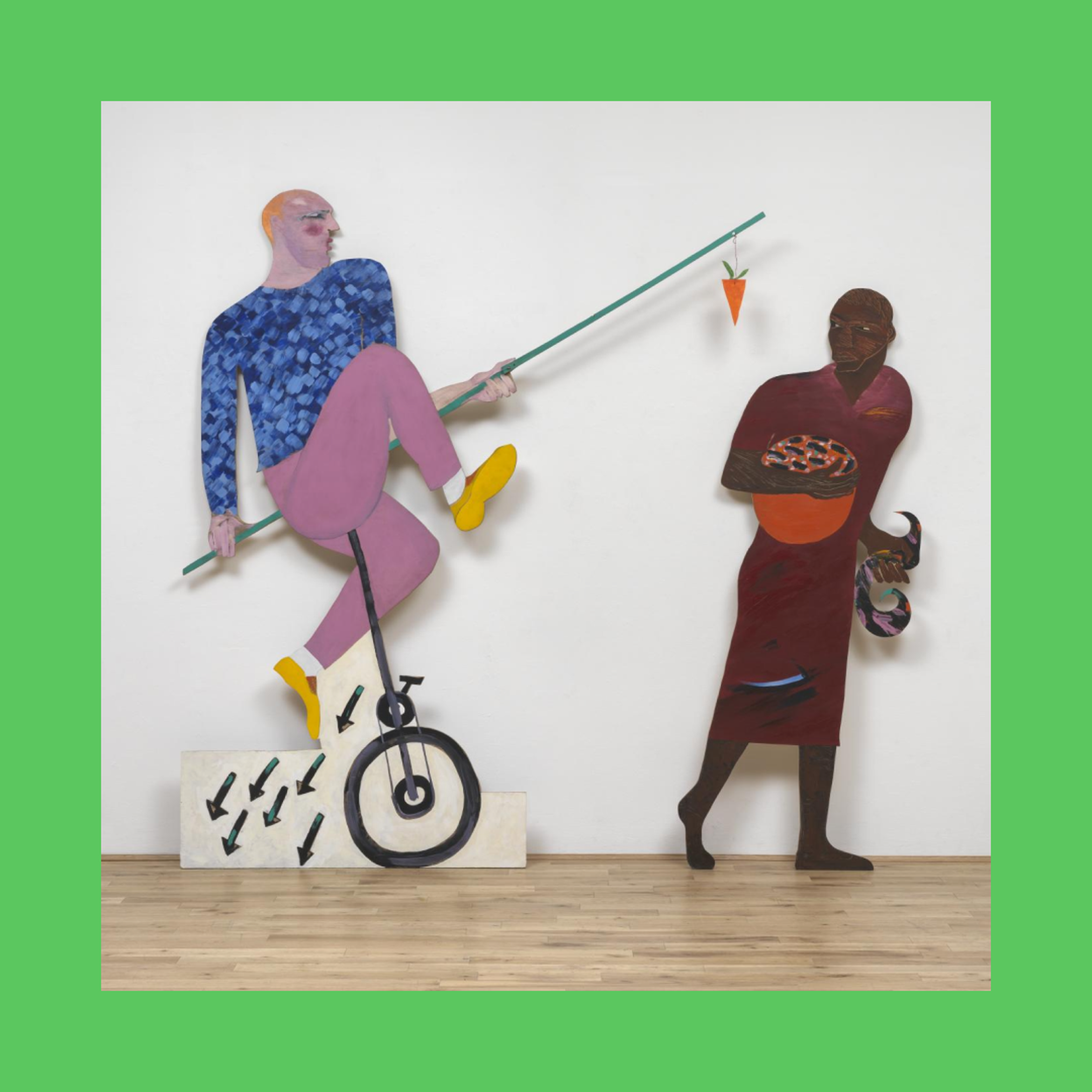
Lubaina Himid, The Carrot Piece, 1985
essay

The art movement that redefined Britain

What does it mean to be a British artist? The British Black Arts Movement introduced the world to a side of Britain that had been previously kept out of museums and galleries.

8 min read
Avant Essay, Bridging the gap between Hip-Hop and Art
essay

Bridging the gap: how 50 years of hip-hop has changed the artworld

This is the story all about how hip-hop and art have propelled each other to global domination. From graffiti on the streets of the Bronx to record breaking auction results, hip-hop giants continue to make waves in the artworld.

8 min read
Avant Essay, I feel like Pablo
essay

I feel like Pablo

Kanye West named Pablo Picasso as one of his role models, but the two of them have more than art in common. What do we do about our problematic faves? Can you separate the art from the artist?

5 min read

Insightful?

Insightful?

Subscribe to the Avant Arte newsletter for the art world in your inbox.


Discover more insights

Black and white photo of Georgia O'Keefe
00:58
video

Georgia O’Keeffe

Georgia O’Keeffe was a pioneer of American Modernism. Her sensual paintings, from the early 1900s to her death in 1986, reflect the promise and pitfalls of the 20th Century.

Dmitri Cherniak walks through LACMA lamps
37:35
video

In conversation: Dmitri Cherniak at LACMA

After the acquisition of Ringers #962 into LACMA's collection, Generative artist Dmitri Cherniak and LACMA Curator Dhyandra Lawson discuss the artistry of systems, curating randomness, and the origins of Ringers.

a hand emerges from either side of a pale green door, through a hole in which two painted eyes are visible.
article

Paul Insect: Personal Effects

Paul Insect arrives in Amsterdam.

2 min read
Alice Brasser sitting on a chair in her studio
1:10:31
video

Live Event: Painting with Alice Brasser

On March 6, we joined Alice Brasser in her studio for a 1-hour painting session. Rewatch the livestream from start to finish.